Understanding How Spring Balancers Actually Work

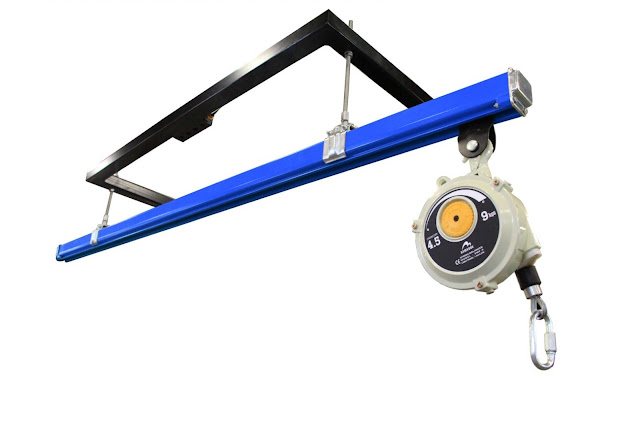
Heavy equipment feels weightless in your hands because of spring balancers, which are amazing contraptions that appear to defy gravity. However, a lot of professional spring balancer working principle utilize them on a daily basis without fully comprehending the ingenious architecture that makes them function smoothly. Not only is this information fascinating, but it also aids in the appropriate upkeep and more efficient usage of these items. Let's go down the operating principle of spring balancers using five key features that highlight their clever design.
The Foundation: Constant Force Spring Mechanism
A tightly wound ribbon of spring steel twisted around a drum is the central component of all spring balancers. These specialty springs retain constant tension throughout their extension, in contrast to regular springs that alter resistance as they stretch. The spring smoothly unwinds from the drum when a tool is pulled downward, producing an upward force that precisely balances the weight of the tool. The enchanted feeling of floating that employees have is caused by this constant force concept.
Tension Adjustment: Matching Tool Weight Perfectly
Due to the variation in weight of the instruments, spring balancers are fitted with proper adjustment mechanisms. With a simple dial or knob, you can fine-tune the spring tension to fit your specific tool. When the balancer is adjusted properly, it will create a certain balance point where the downward force of the tool and the upward force of the spring are exactly equal. The tool is in place wherever it is and will not need any intervention to move laterally, vertically, or horizontally during use due to its optimal balance.
The Cable System: Smooth and Controlled Movement
The vital link between tension and application is a sturdy steel wire that runs from the spring mechanism to your instrument. This cable winds onto or unwinds from the drum with precisely tailored smoothness as you move the tool. Throughout the whole operating range, the cable's constant balance and tangle-free functioning are guaranteed by its routing through guides and pulleys. Tools may move in three-dimensional space with ease and complete control thanks to this intricate yet straightforward technology.
Safety Lock Features: Preventing Unwanted Movement
Safety features that prolong equipment life and prevent accidents are integrated into high-quality spring balancers. In order to prevent unplanned retraction when tools are detached, the majority of units come with a locking mechanism that locks the cable at any specified length. Certain types include progressive braking systems that automatically reduce cable movement to shield the tool and user from unexpected shocks. These safety features operate quietly in the background, offering comfort without obstructing regular business operations or workflow.
Load Distribution: Physics at Your Service
The balance principle, on the basis of which the opposite forces neutralize each other, regulates the work of the whole system. The spring attempts to rewind, and the tool weight begins to drag downwards. The tool is virtually weightless in case these forces are balanced. This does not mean that the tool is massless, but it only means that the spring is doing most of the work, and you are just providing directional support. Being aware of this principle contributes to enhancing the productivity of the balancer and helps operators to define cases when recalibration should be carried out.
Conclusion
Spring balancers are sophisticated engineering solutions for common problems encountered in the workplace. You may maximize the cable balancer efficiency and appreciate the intricate physics that make your work safer and easier every day by comprehending these five basic concepts.

.jpg)
Comments
Post a Comment